


On Resilience and Public Failure
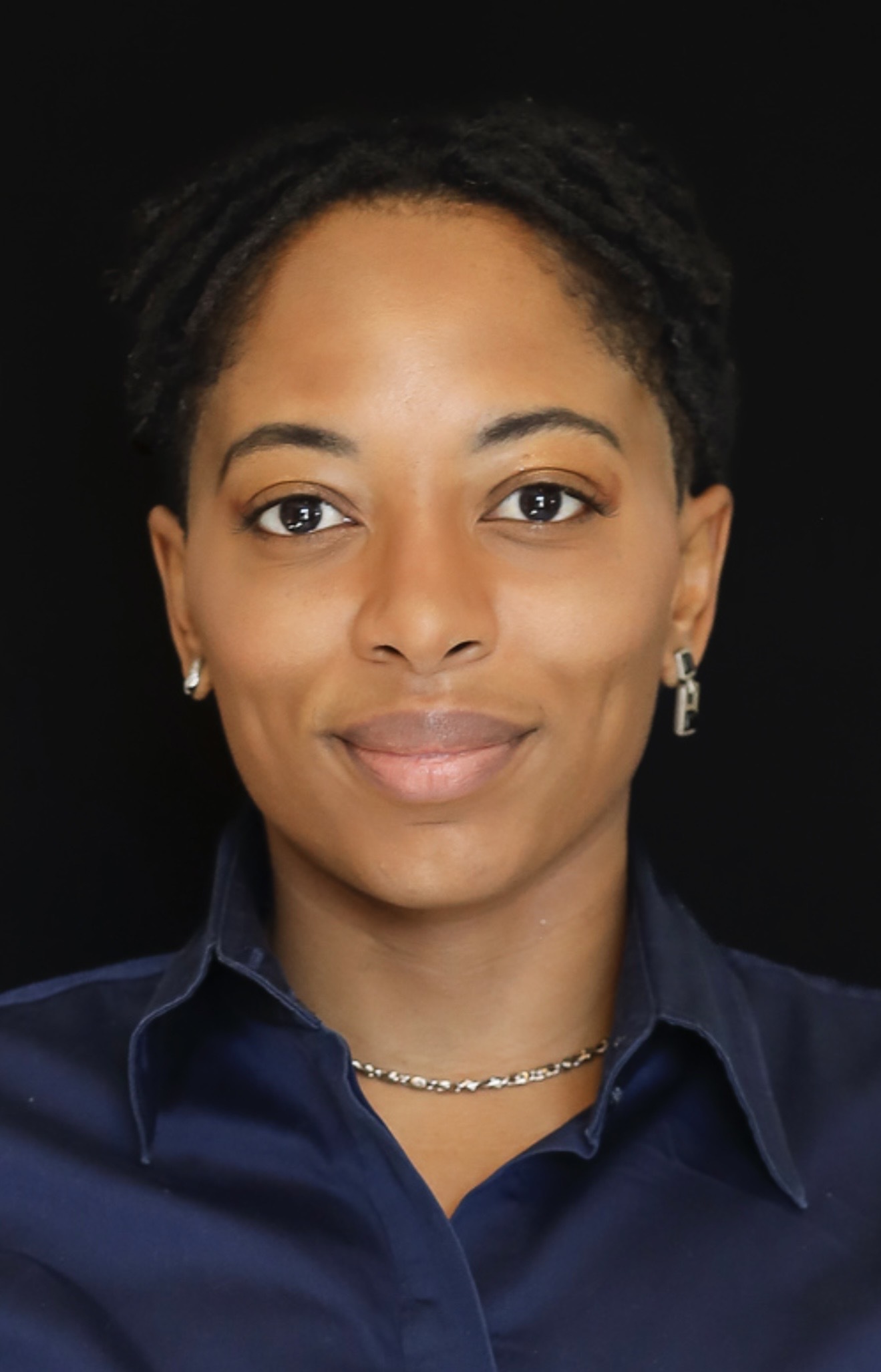
I’ve been building Journey Foods for years now. I started it while leading a venture capital firm in Chicago and working on the foundational AI and patents for the tool. The idea has brought me to great corners of the world, millions of dollars, and exciting tables. I’ve also been sued, ghosted by investors, and handed contracts that looked like opportunities and turned out to be traps. And I’m still here — not despite those things, but because of how I chose to handle them.
Here’s what I’ve learned watching other founders and high-profile leaders navigate public failure: the ones who survive it aren’t the ones with the best spin teams. They’re the ones who figured out how to own the narrative before the narrative owns them.
01 — THE WOMEN WHO ARE OWNING THEIR FAILURES RIGHT NOW
Fawn Weaver and Pinky Cole taught me the foundational version of this. Not in a boardroom — through watching them refuse to perform perfection. Fawn built Uncle Nearest into the largest Black-owned distillery in the country while speaking openly about trademark fights, industry gatekeeping, and what it actually costs to build something lasting in a space that wasn’t built for you. Pinky Cole watched a restaurant close and talked about it publicly — not to generate sympathy, but to let her community in on the real texture of building.
Both of them understood something I’ve had to learn slowly: when you hide your struggles, you make the people watching you feel alone in theirs.
“When you hide your struggles, you make the people watching you feel alone in theirs.”
— Riana Lynn
02 — THE FUNDING GAP IS REAL
As a Black, queer woman building in food tech — in a funding landscape where women like me receive less than 0.34% of U.S. venture capital — I’ve had every systemic reason to keep a low profile and avoid drawing scrutiny. Instead, I started sharing the hard parts.
0.34% - U.S. VC RECEIVED BY BLACK WOMEN FOUNDERS
3% - RATE AT WHICH BLACK WOMEN STARTUPS REACH MATURITY
90% 0 OF ALL STARTUPS THAT ULTIMATELY FAIL
03 — THE HIGH-PROFILE PLAYBOOK
Elon Musk operates at a very different scale but applies the same underlying principle. He’s said publicly that he gave both Tesla and SpaceX less than a 10% chance of succeeding when he started them. He’s talked about how close both companies came to bankruptcy — not in vague terms, but with the kind of specificity that makes you understand he was actually living it. Whatever you think of him, “anything which is significantly innovative is going to come with a significant risk of failure” is an accurate statement delivered without the usual sanitizing. The strategy is deliberate: name the risk early, publicly, in your own words — and then you’re never entirely surprised by what happens next, and neither is your community.
It's an era of the founder being public in their wins and losses. It can pay to to consistently manage a position every comeback as proof of durability rather than evidence of recklessness. The lesson isn’t to be careless and then spin. It’s that narrative ownership is a real and learnable skill — and leaving that story untold is never actually neutral. Someone else will tell it.
04 — MY OWN SPEED
When a partnership at Journey Foods went sideways early on — a rushed contract, misaligned expectations, a dispute that cost us time we didn’t have — I could have kept it quiet. But that contract wasn’t an anomaly. It was a symptom of how I was operating across the board.
I hired friends because I trusted them and because trust felt like enough. I hired strangers because they were impressive and because impressive felt like enough. I moved fast and broke things, which sounds like a philosophy until you’re the one cleaning up what broke — including relationships with people you genuinely cared about. The “move fast” era of my company cost me more than slow, deliberate decisions ever would have. Not because speed is inherently wrong, but because I was using speed to avoid the harder work of discernment.
Pairing the wrong people with the wrong roles, at the wrong stage, for the right reasons — that’s its own kind of trap. Nearly a quarter of startup failures trace back to team and partnership issues. I understand that number viscerally now.
Instead, I posted about it. Not to air grievances, but to name the pattern: speed is not momentum. Clear terms at the start of a relationship are not a sign of distrust. They’re respect. I now require a 48-hour review period on every agreement before anything is signed. It sounds small. It’s changed everything about how we operate.
05 — THE SHOWY INVESTOR
I’ve also had investors promise substantial commitments, go deep into diligence, and disappear without explanation. Most of them don't even have the funds but they build pipelines until the LPs come through. The first time it happened, I internalized it — wondered what I’d done wrong, whether I’d been naive, whether I should have seen it coming. The second time, I posted about it. I described the pattern: the hype, the promises, the sudden silence. I named what founders need to watch for — non-binding LOIs with clear timelines, explicit next steps, early vetting of whether the capital actually exists.
The response was significant. Other founders recognized the experience immediately. Several reached out to say they’d been through the same thing and hadn’t known how to talk about it. That’s the cost of collective silence: we each think we’re the only one who got played.
“Don’t chase ghosts — vet commitments early. Silence isn’t neutral. Someone else will fill that story if you don’t.”
— Riana Lynn
06 — STILL HERE
Ninety percent of startups fail. Nearly half are gone by year five. I’ve thought about those numbers during the hard stretches — not as warnings but as context. This is supposed to be hard, and the founders who survive aren’t the ones who avoided difficulty. They’re the ones who stopped pretending it wasn’t happening. Fawn building through legal battles, Pinky rebuilding after public setbacks, Musk staring down bankruptcy at two companies simultaneously, and many creatives reframing bankruptcies as battle scars — none of them won by disappearing when things got difficult. They won by staying visible and controlling what that visibility meant.
We’re profitable almost now at Journey Foods and rapidly evolving our tools into a large agentic suite. I believe we are on the forefront of Industry 4.0: and will continue to lead us in the future of AI. That idea still catches me sometimes. We got here after bad contracts, failed investor commitments, cash crunches, and more than a few moments where the path genuinely wasn’t clear. I also got here by owning the gaps — in our financial forecasting, in our team structure, in my own skill set as a CEO. I brought in a fractional CFO after a rough cash flow period. I invested in business education in areas where I was genuinely weak. I stopped treating vulnerability like a liability, because Fawn and Pinky showed me it isn’t one, and because the math on silence just doesn’t work.
Your setbacks aren’t the liability. Silence is. If you’re building something right now and you’re in a hard chapter — share it. Not to perform struggle, but because someone in your network is in the same situation and doesn’t have language for it yet. The founders I most respect have figured out that the mess is part of the material. Use it.
WHAT I’M DOING ABOUT IT · THREE ACTIVE COMMITMENTS
I am committed to my life as an entrepreneur. I could have stayed in the 9-5 route with big pay packages, no lawsuits, less HR, less sleepless nights - and ultimately less lessons. I am committed to a life of visionary building, impact, and community health change.
I’m not waiting to be ready. Evolve or die.
01
Evolve or Die — No Comfortable Stagnation
The companies and founders who disappear aren’t always the ones who failed dramatically. Most of them just stopped evolving quietly. I’ve made a non-negotiable commitment to myself: if I’m not actively changing, I’m actively falling behind. That means quarterly re-evaluation of every assumption I’m holding about the market, about my team, about Journey AI’s direction. What worked at year two doesn’t run year six. I’m retiring the playbook on a rolling basis and rewriting it from current reality — not the reality I wish were true.
02
Own Every Weakness — Then Build an Agentic Plan to Fight It
Naming a weakness without a plan is just self-flagellation. I sit down monthly and list the places where I am genuinely not good enough yet — not the polished version I’d say on a panel, the real one. Then I build an agentic action plan for each one: who handles what I can’t, what I’m learning to close the gap, what the 90-day milestone looks like. Speed-over-discernment was my weakness. Moving-fast-with-the-wrong-people was my weakness. I don’t just acknowledge those now — I have live systems fighting both of them every week.
03
The Discernment Plan — On a Timer, On Repeat
This one is the hardest because it runs against my natural wiring. I move fast. I trust quickly. I believe in people early. Those are also the exact conditions that produced my worst hiring decisions and my worst contracts. So now I run a structured discernment cycle on every significant decision — partners, hires, investors, deals: 48-hour minimum hold before committing. A written list of what I know versus what I’m assuming. A named person who will tell me what I don’t want to hear. And then I repeat the cycle. Not once. On a calendar. Because discernment isn’t a moment — it’s a practice.
Stay building,
Riana Lynn · @rianalynn · Founder & CEO, Journey Foods